On a quiet spring morning at Henry’s Home, I stood at the edge of the main arena and watched a veteran approach WallE, our herd leader. The man moved with deliberate calm; his shoulders relaxed in a way I had not seen during his first visits months earlier. WallE lifted his head, ears forward, and took three unhurried steps toward him. In that single, wordless exchange—a horse and human connection across the dew-covered grass—something profound occurred. It was not a spectacle. It was a connection. It was healing.
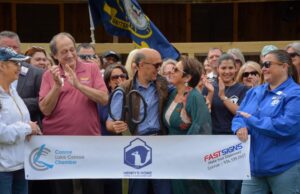
That moment crystallized why Denis and I remain deeply committed to this sanctuary. We came intending to offer marketing expertise and board service. Instead, the sanctuary, its people, and its horses reached into our lives and touched us in ways we could never have anticipated. This is their story—and ours.
Our journey to Henry’s Home began with a clear sense of purpose rooted in family legacy. My son, my father, and my grandfather all served as veterans. For Denis, the pull was equally personal: his father was a Korean War veteran, as are his brothers, and he himself carried the weight of that shared history. We understood, from lived experience within our own families, the invisible burdens many veterans and retired first responders carry long after their service ends. When the opportunity arose in late 2023 to support a fledgling nonprofit dedicated to equine-assisted learning for these heroes, we saw it as a chance to give back.
On May 1, 2024, we formally committed at a different level. While we joined the board of directors to offer strategic marketing support, Donna, the founder, wanted to retire. So we thought, let’s lend a helping hand for 90 days until we hire a replacement. Our initial plan was straightforward: lend our entrepreneurial experience, help stabilize operations, and step away after approximately ninety days once the organization had gained momentum. We believed our role would remain at a distance—professional, advisory, and limited.
Reality unfolded differently. Within weeks, we found ourselves in full building mode. The sanctuary was in its infancy, and the needs were layered and immediate. What began as a supportive commitment quickly revealed itself as an intricate, rewarding endeavor that demanded our full attention. Like peeling an onion, each layer of progress exposed new opportunities and responsibilities. The pastures required attention. The facilities needed upgrades. The programs demanded structure. Most importantly, the people—volunteers, veterans, and the horses themselves—invited us into something far more meaningful than we had envisioned.
As an entrepreneur, I have built and led multiple businesses over the decades. Some achieved remarkable success; others ended in difficult lessons. Denis and I joined the entrepreneurial space a decade ago, and we understand the satisfactions that accompany ownership—the independence, the travel, the material rewards. Yet as we entered our later years, a deeper question emerged: Is this the legacy we wish to leave for our children and grandchildren? We wanted them to remember more than financial achievements or impressive titles. We sought to model servant leadership—the quiet, sustained commitment to something larger than oneself. Henry’s Home became the vehicle for that intention. We brought our grit, our strategic thinking, and our determination to transform this young nonprofit into a robust community asset that can serve veterans and retired first responders for generations.
What sustained us through the long days and unexpected challenges were the people who already called the sanctuary home. One by one, we came to know our volunteers not merely as helpers but as individuals with their own compelling stories of arrival and dedication. Their commitment to the rescued horses extended far beyond routine care. They tended bodies and souls alike, approaching each animal with patience, respect, and genuine affection.
We gradually began welcoming new volunteers, watching as they connected with the land and the mission. Their willingness to cultivate, to build, and to contribute alongside us revealed the essence of community. Bill, for instance, shares my deep appreciation for the birds that frequent our feeders. He prepares his own special seed mix and joins me in the daily ritual of refilling them—often while we laugh together about the persistent pigs that knock the feeders over in their enthusiastic searches for an easy meal. His quiet joy in these small acts of stewardship reminds me daily of the many ways people find purpose here.
Tom, a veteran volunteer, offered a perspective that forever changed my understanding of gratitude. In June 2024, shortly after we arrived, Tom showed up to help us manage the horses during a terrible storm. I thanked him for his service as a veteran at the office door, and he looked me in the eye and said, “Never thank me for my service. If you knew what I did, you wouldn’t thank me.” That statement, delivered with quiet honesty, stopped me cold. It taught me that genuine respect for those who have served requires listening first and assuming nothing. It deepened my determination to create a space where veterans feel seen without judgment.
In the spring of 2025, Denis faced health challenges, and our volunteers’ compassion became deeply personal. Donna, the wife of a veteran, and Al, another dedicated volunteer, kept a watchful eye on him as he worked in the gardens while I handled work in the office or was off-site. On more than one occasion, Al postponed his planned time with Irish, his favorite horse, to help so Denis would not become exhausted. These acts of quiet care—unasked for and freely given—showed the sanctuary’s culture of mutual support. The volunteers weren’t just caring for horses; they were caring for each other and, by extension, for us.
Equally inspiring are the veterans and retired first responders who participate in our programs. Week after week, they come back. They choose to engage, even on tough days. Krista, one of our facilitators, often reminds participants that this is “challenge by choice.” The phrase captures the heart of our approach: no one is forced, but many choose to show up for themselves. We observe from a respectful distance as visible changes appear—posture straightens, conversations last longer, smiles come more easily. We hear their stories of better sleep, less anxiety, and stronger bonds with family.
To ensure our programs achieve measurable results, we gather data thoughtfully and respectfully. The evidence is clear: horses support mental health. Participants in our Self-Care Saturday sessions, Men’s and Women’s Groups, and Co-Ed Group consistently report and show lower stress levels, better emotional regulation, and increased resilience. These results are not just anecdotal; they are documented through structured feedback and observation. We share this information not to sensationalize but to confirm what we see daily—equine-assisted learning provides a powerful, non-clinical pathway to healing.
One element of this work caught me entirely by surprise: the horses themselves. When we first arrived, my focus was squarely on the heroes. Horses occupied a place on our vision board—a beautiful, majestic image representing an eventual retirement dream of grandchildren gathered around a Christmas tree near a pasture. They were symbolic rather than central.
That perspective shifted decisively through WallE.
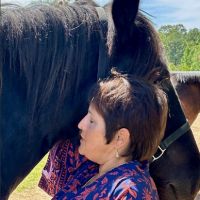
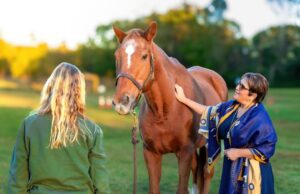
As the herd leader, WallE possesses a quiet authority that commands attention. His steady gaze would follow me across the property. If I had been absent for several days, he would offer a deliberate nudge—gentle yet unmistakable—when I reappeared. Initially, I kept my distance. Then, with guidance from Carol, a trusted staff member, I began a slow, respectful introduction process in the pasture after hours. Progress was gradual. WallE showed measured interest at best. After closing hours, our session, however, he chose to walk toward me rather than the reverse. In that instant, my heart shifted. I resolved to invest time in getting to know each horse individually.
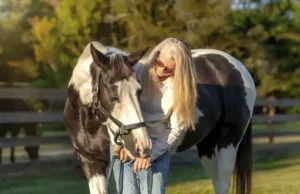
The process continues. I have not yet connected at a profound level with every member of our twenty-five-horse herd, yet each interaction has enriched my understanding of presence, patience, and mutual respect. The horse-human connection possesses many-layered facets, and I have observed its transformative power both in others and within myself.
Our own connection with the horses deepened further when we welcomed Heavenly Affair—affectionately known as Hank—into our lives. Hank is the grandson of Winston, a horse whose lineage has contributed significantly to the quality of our herd. Bred by Ms. Kae at Kaeson Farms in Bastrop, Texas, Hank had been sold at two years old and passed among several owners before finding his way back into Ms. Kae’s care. At eighty years young, Ms. Kae’s passion for breeding exceptional horses remains undiminished, and her dedication continues to benefit Henry’s Home. She initially asked Henry’s Home to consider his adoption, but I knew we were at capacity and this would be an impossible task. I told Denis that the only way this would work was for us to personally adopt him.
Denis initially complained about the drive to Kaeson Farms, jokingly saying that the horse was more of a vision-board goal than a practical reality. However, Hank quickly captured his heart. Denis humorously noted, “Hank is only being nice because he knows I am going to write the check.” Today, Hank is ours. His strong build and quiet resilience reflect aspects of my own journey. I left home at seventeen and spent decades working in corporate roles and entrepreneurship, always moving but never feeling truly settled. Hank’s story resonates deeply. He, like the sanctuary horses that serve our heroes, teaches presence and self-regulation every day. Horses can sense a human heartbeat from sixty feet away and are often in a constant state of fight-or-flight readiness. To work well with them, you need to let go of the worries of the day and find genuine calm. Even during moments of high energy or excitement, regulation is necessary to achieve the desired outcome. These lessons directly apply to human challenges.
Running a nonprofit of this nature is not for the faint-hearted. The work encompasses three interconnected facets: the “hero” programs, volunteer management, and fundraising that sustain our mission, the land and facilities that provide our physical foundation, and the horses whose care demands unwavering attention. Each facet requires strategic oversight, twenty-four-hour responsiveness, and a balance of compassion with operational competency. Pipe breaks on the property, unexpected veterinary needs, seasonal shifts in pasture conditions, and the ongoing demands of program delivery create a dynamic environment. Denis and I have structured our lives around these ebbs and flows, embracing the complexity because the reward—lives restored and legacies built—far outweighs the demands.
What began as an offer of marketing support and board service has become something far richer. We have been touched by the volunteers whose dedication sustains the daily operations. We have been touched by the veterans and retired first responders who choose healing week after week. And we have been touched, most unexpectedly, by the horses themselves. No longer are they merely a vision-board ideal or a means to an end. They have nudged their way into our hearts with the same quiet persistence they show our participants. We would walk through any difficulty for the heroes we serve; today, we say with equal conviction that the horses are embedded in our hearts just as deeply.
As spring unfolds across the Texas landscape—bringing longer days, greening pastures, and the quiet renewal that characterizes this season—we reflect on new beginnings. Easter reminds us of the potential for fresh starts and purposeful growth. In that spirit, I invite every reader to consider your own “why.” Move beyond simply earning a living or going through the motions. Discover a cause, a mission, or a contribution that gives your life deeper meaning. Whether through service, mentorship, or support for organizations like Henry’s Home, each of us possesses the capacity to leave a legacy that endures.
The sanctuary stands as living proof that when individuals commit with open hearts, extraordinary change occurs. Volunteers, participants, staff, donors, and horses together create something greater than any single person could achieve alone. Denis and I are grateful beyond measure to be part of this community. We look forward to many more seasons of renewal, connection, and healing.
If our story resonates with you—if you seek a place to volunteer, participate, donate, or simply learn more—I encourage you to reach out. Appointments are required for program involvement, and we welcome inquiries from individuals, families, and organizations who share our commitment to service and legacy. Visit henryshomesanctuary.org or contact us directly. Together, we can ensure that Henry’s Home continues to touch lives for years to come.
The horses and heroes have touched us. In return, we dedicate ourselves to ensuring their sanctuary thrives.
Darlene