Veterans Day reminds the country to pause and say thank you. For those of us who have lived inside military families across generations, recognition is not a once-a-year ceremony. It is a daily practice of seeing the person in front of us—the father who still flinches at certain sounds, the son who came home different, the spouse who carries the household while the warrior carries the memories, the grandchild who is learning what service costs.
I write this as a granddaughter of a veteran, the daughter of a Vietnam veteran who earned the Bronze Star and Purple Heart, the wife of a veteran, and the mother of a Navy veteran who medically retired. I have watched the silence that often follows service. My father returned on a Friday, went back to work on Monday, and carried what he had seen for the rest of his life without the language or the support that later generations have begun to claim. My son’s years of limited communication taught me that the hardest part of loving a veteran is sometimes the waiting, the not-knowing, and the determination to keep the door open anyway.
Recognition begins with the willingness to notice. It continues with the humility to learn, the courage to stay present, and the wisdom to point people toward help that works. Here is what I have learned, and the resources that back it up.
The Cost of Not Seeing
Service does not end when the uniform comes off. Many veterans carry invisible wounds—PTSD, traumatic brain injury, moral injury, chronic pain, sleep disruption, and the quiet accumulation of losses that never made the evening news. When families treat the veteran as “fine” because they are functioning, or as “broken” because they are struggling, both approaches miss the person.
The VA’s National Center for PTSD is clear: PTSD does not stay with the individual. It reshapes the household. Irritability, withdrawal, hypervigilance, and emotional numbing affect spouses, children, and parents. Families often absorb secondary stress without naming it. The National Center’s guide Understanding PTSD: A Guide for Family and Friends and its page on how PTSD affects families explain the patterns and offer concrete steps for responding without taking the symptoms personally.
My father’s generation largely managed alone. Many of today’s veterans and their families have more tools, but only if someone helps them find and use those tools. Recognition is the first step: acknowledging that the experience was real, that the effects are real, and that the person is still worthy of respect and connection.
Listen First—and Keep Listening
One of the most powerful things a family member can do is create a space where the veteran does not have to perform wellness. The National Center for PTSD recommends telling your loved one you want to listen and that you understand if it is not the right time to talk. It also suggests planning ordinary activities together—dinner, a walk, a movie—so connection is not only about the hard topics.
In our family, we learned the difference between interrogation and presence. Asking “What happened over there?” on a schedule rarely helps. Sitting nearby while the veteran decides whether and when to speak does. The PTSD Family Coach app, free from the National Center for PTSD, gives family members practical tools for exactly this: understanding symptoms, managing their own stress, and supporting without trying to fix.
Wounded Warrior Project’s family support programs and the VA Caregiver Support Program (1-855-260-3274) reinforce the same idea: the family’s role is not to become the therapist. It is to remain a steady, non-judgmental presence while professional care does the clinical work.
Learn the Language of Invisible Wounds
Ignorance is not neutral. When family members do not understand PTSD, TBI, or the ordinary stress of reintegration, they often interpret symptoms as character flaws. The National Center for PTSD’s pages for family and friends list clear actions: learn as much as you can, offer to accompany the veteran to appointments, encourage contact with other supportive people, and take care of your own health at the same time.
Military OneSource (800-342-9647) provides free, confidential counseling and resource referrals for service members, veterans, and families on topics ranging from deployment stress to post-service adjustment. NAMI Homefront offers a free six-session educational program specifically for families of service members and veterans. These are not signs that the family is failing; they are evidence that the family is willing to get better at supporting someone they love.
For children, age-appropriate conversation matters. Resources such as the National Center’s materials on children coping with deployment and broader family guides emphasize that children need to hear: this is not your fault, it is not your job to fix, the adults are working on solutions, and you are loved. Sesame Street for Military Families remains a practical, free tool for younger kids.
Honor Service Without Requiring a Performance
Many veterans are tired of being asked to retell their stories on cue for holidays or social media. True recognition looks different. It can be as simple as:
- Remembering service anniversaries or deployment dates without turning them into forced conversations.
- Noticing and naming strengths that developed in service—discipline, loyalty, problem-solving under pressure—while also making room for the costs.
- Protecting the veteran from people who demand graphic details or who treat PTSD as a curiosity.
- Including the veteran in ordinary family life rather than isolating them “so they won’t be triggered.”
The UCLA Health description of Operation Mend’s approach (part of Wounded Warrior Project’s Warrior Care Network) is instructive: families are integrated into care rather than left on the sidelines. Integration, not isolation, is the healthier pattern. That principle applies at home as well as in formal programs.
Support Treatment Without Taking Over
Encouraging a veteran to seek care is different from demanding it or managing every appointment. The National Center for PTSD and Military OneSource both emphasize offering to go along, helping track logistics if asked, and respecting the veteran’s autonomy. Evidence-based treatments such as Cognitive Processing Therapy, Prolonged Exposure, and EMDR are available through the VA and through community partners. The PTSD Treatment Decision Aid on the National Center site helps veterans and families compare options.
If a crisis arises, the Veterans Crisis Line is available 24/7 for veterans, service members, and their families: call 988 and press 1, text 838255, or chat online. Family members can and should use it. The Vet Center Combat Call Center (1-877-WAR-VETS) offers another confidential line staffed by people who understand military experience.
For caregivers who are providing substantial daily support, the VA Caregiver Support Program and Wounded Warrior Project’s caregiver resources include education, counseling, and, for those who qualify, financial stipends and respite. Recognizing the caregiver is part of recognizing the veteran; the load is shared.
Care for the Whole Family, Including Yourself
Secondary stress is real. Spouses and adult children of veterans often develop their own anxiety, sleep problems, or emotional exhaustion. The National Center for PTSD is explicit: family members need their own support. That can mean individual counseling, peer groups, or simply protected time that is not organized around the veteran’s symptoms.
Wounded Warrior Project allows family support members (spouses, parents, siblings, adult children, close friends) to register and access mental health resources, peer connection, and educational tools. Military OneSource counseling is available to many family members. Local Vet Centers offer free counseling to combat veterans and their families without requiring VA enrollment for counseling.
In our own multi-generational story, healing has required each of us to tend to our own hearts while remaining connected to one another. My son’s long periods of limited contact were painful; continuing to send messages of love without demanding a response kept the relationship from closing completely. My father’s silence taught me that some veterans will never fully narrate what they carried; love can still be present without the full story.
Connection Beyond the Household
Isolation makes symptoms worse. Family recognition includes gently supporting connections outside the home: other veterans, trusted friends, faith communities, or programs that offer purpose and calm. Many veterans respond better to environments that don’t require constant verbal processing. Nature, animals, physical work, and structured peer activities can lower the guard that clinical settings sometimes raise.
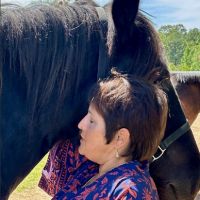
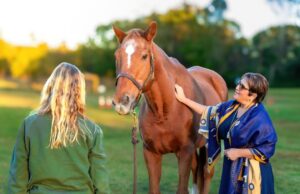
At Henry’s Home, we see this regularly. Veterans and their family members often find that time with horses—grounded, non-judgmental, present-focused—creates openings that conversations alone have not. Our programs are one option among many; the broader principle is that recovery is rarely a solo project. Peer support through Vet Centers, Wounded Warrior Project, or local veteran organizations can be as important as formal therapy.
A Practical Starting List for Families
If you are a family member who wants to do better at recognizing the veteran in your life, begin here:
- Read the free National Center for PTSD guide Understanding PTSD: A Guide for Family and Friends (available as a PDF on their site) and visit their family pages.
- Download the PTSD Family Coach app.
- Save the Veterans Crisis Line: 988, then press 1.
- Call the VA Caregiver Support Line (1-855-260-3274) or Military OneSource (800-342-9647) to learn what is available in your area.
- Explore NAMI Homefront or local Vet Center family counseling.
- If the veteran is open to it, look at Wounded Warrior Project family registration or VA mental health services, including Make the Connection stories from other veterans and families.
- Protect ordinary connection: shared meals, walks, quiet presence. Do not make every interaction a check-in about symptoms.
- Tend to your own health and support network. You cannot pour from an empty cup, and the veteran needs you steady more than they need you exhausted.
The Long View
Recognition is not a single conversation or a perfect response to a hard day. It is the cumulative effect of years of showing up—listening when the veteran is ready, learning when you do not understand, protecting dignity, encouraging help, and refusing to let the worst days define the person you love. Across the generations in my own family, I have seen both the cost of silence and the slow, imperfect healing that becomes possible when someone stays.
The veterans in your family already know what they gave. What they often need from us is the quieter, harder gift: to be seen as whole people whose service was real, whose wounds are real, and whose future is still open. That kind of recognition does not require grand gestures. It requires presence, information, and the willingness to walk with them toward whatever resources actually help.
If you or a veteran you love is in crisis, call or text 988 and press 1. For ongoing family support, start with the National Center for PTSD (ptsd.va.gov), the VA Caregiver Support Program, Military OneSource, or Wounded Warrior Project’s family resources. You do not have to figure this out alone. Neither do they.
Together, we heal.